Make this the last time you start again
Bespoke one to one online coaching, built round the week you've actually got.
30-day money-back guaranteeYou've been here before
Let me take a guess: you've either stopped and started this more times than you'd care to count, or you never really started, because there's no obvious place to begin.
Either way, you're likely worn out more often than not: waking up still tired even after what you think is a decent night's sleep, with not much left in the tank by the evening. That usually gets put down to work, or just life. It's rarely either.
It isn't what you think
Maybe you already know what to do. Eat better, train properly, get to bed earlier. And you still aren't doing it. Or maybe nobody ever sat you down and explained how any of it works. Whichever it is, it's probably not down to discipline. There'll be things you've stuck at for years, some of them a lot harder than this, and nobody had to stand over you to make you do them.
Whatever you might have tried, it was never built for you, and it couldn't have been. A plan written for everyone can't know what your week looks like, what your body's already been through, or what you'll actually keep doing. Months of real effort, not much to show for it. I'd have stopped too.
So if you've stopped and gone back round again, you're in the overwhelming majority. Which tells you a lot more about the plans than it does about the people following them.
What actually works
The stuff that decides whether this works fits on one hand. Eat less than you burn and you lose fat, eat more and you add size. Eat enough protein, or you don't keep what you're building. Work a muscle hard enough, often enough, and it grows. Give it a bit more to do as you get stronger. Then keep going long enough for it to count.
Every diet and every programme out there is a different way of doing those five things, which is why two people can train in opposite ways, eat completely different food, and both end up where they wanted to be. It looks like a contradiction until you notice they were both doing the same five things underneath. Which leaves the question I get paid to answer. Of all the routes that would work, which one will you still be on in six months? The one that fits your week, your history and the food you actually like.
What's left is the dose and frequency, and in what order. That part depends on you, your job, your life outside it, your body and what you'll actually stick to. On the face of it that sounds like a lot of work. It's usually a good deal less than you imagine.
Better, not more.
Your options, honestly
Go it alone
If that worked, you probably wouldn't be reading this. And you'd still be the one deciding which advice to trust, without the experience to tell the good from the bad. Pretty much everyone at the top of their sport has a coach, and they know more about training than almost anyone.
An app on its own
A plan built for nobody in particular, doing the same thing for you as it does for 10,000 other people. Nobody checks how it's going, and nobody tells you when it's the wrong plan for you.
Ask an AI
It'll answer the question you asked, and the answer might be perfectly right for that question. The trouble is knowing what to ask. Get the question wrong and you'll get a confident answer that's wrong for you, and if you knew enough to spot that, you wouldn't have needed to ask in the first place. So you follow it for months before anything tells you otherwise. It gives you the optimal version, not the one that fits your life.
Or coaching built round you
Me. I learn your week, your history and what you're actually working with, then pick what applies to you and drop what doesn't. I watch what happens and change it when it needs changing. And when your week falls apart, I'm here to tell you what to do about it instead of writing the whole thing off.
When people have actually measured the difference, it isn't small.
What training does for your head
You probably came to this for your body, and so did I. But stick with it and your head gets just as much out of it. When I'm training properly, I'm in a better mood, I've got more energy and I think more clearly, and when I stop, all three slide. That isn't just me. The research behind it runs to thousands of trials.
Your mood
You'll know the feeling of finishing a session in a better mood than you started it. Part of that is chemistry: exercise raises endocannabinoids, natural chemicals linked to that lift and to feeling less anxious. Across 1,039 trials, regular exercise reduced symptoms of depression, anxiety and stress. It's also one of the few places where hard work pays you back in a way you can see.
British Journal of Sports Medicine, 2023Your energy
When you're worn out, training sounds like the last thing you need. But you've probably felt the opposite right after a session: more switched on, not less. Over weeks it goes further, as your body builds more of the tiny engines in your cells that make energy, so everyday things start costing you less. Of 70 trials, more than 90% found that people who'd been inactive felt less tired once they trained regularly.
Psychological Bulletin, 2006Your focus
Whatever you do for a living, you need a clear head to do it well. Across 2,724 trials and more than 250,000 people, regular exercise improved memory, concentration and decision making, at every age the research covered. It didn't have to be hard training to count.
British Journal of Sports Medicine, 2025If that sounds like what's been missing, it's worth a conversation. We'll go through where you are now and what you actually want, and by the end you'll know whether I'm the right coach for it.
Book a free coaching call15 minutes, no pressure
How I got here
Most of my twenties I was overweight and unfit, working long hours in retail, eating badly and drinking more than I should have. I'd get home, sit down and play games until 1 or 2 in the morning, then get up and do it all again on not enough sleep.
I did train, on and off, but never long enough for anything to stick. And I found out the hard way that whenever the training stopped, everything else went with it. Sleep, mood, energy, confidence, the lot. The slide is slow enough that you don't notice it, and by the time you do, it's a long climb back.
It took me about 10 years of getting it wrong, so this was never a clean before and after. Things started to turn in my late twenties. For the first time I was lifting heavy on a structured routine, and I put real muscle on, even if there was still plenty of fat over the top of it.
In my early thirties, the rest of it started coming together. I was learning how to eat for it, and putting proper conditioning in alongside the lifting, and bit by bit the fat came off, until I was lean enough to see some definition. All of it round a full-time job and an ordinary life, same as you.
At 38 I packed it in. 20 years of a career I'd grown to dislike, gone, so I could finally do the thing I actually cared about. I moved to Thailand and started training at a Muay Thai camp. My body was strong and looked the part by then, but it wasn't conditioned for fighting, and the camp is where I started building one that was functional and capable as well. Six fights, six wins, and I turned pro the same year. That was never the plan, it just happened on the way.
I'm in the best shape of my life now, and there's nothing unusual about me. No useful genetics, no head start. I'm not looking at your situation from the outside. I was you. And if I can get fitter, stronger and leaner than I've ever been, so can you.
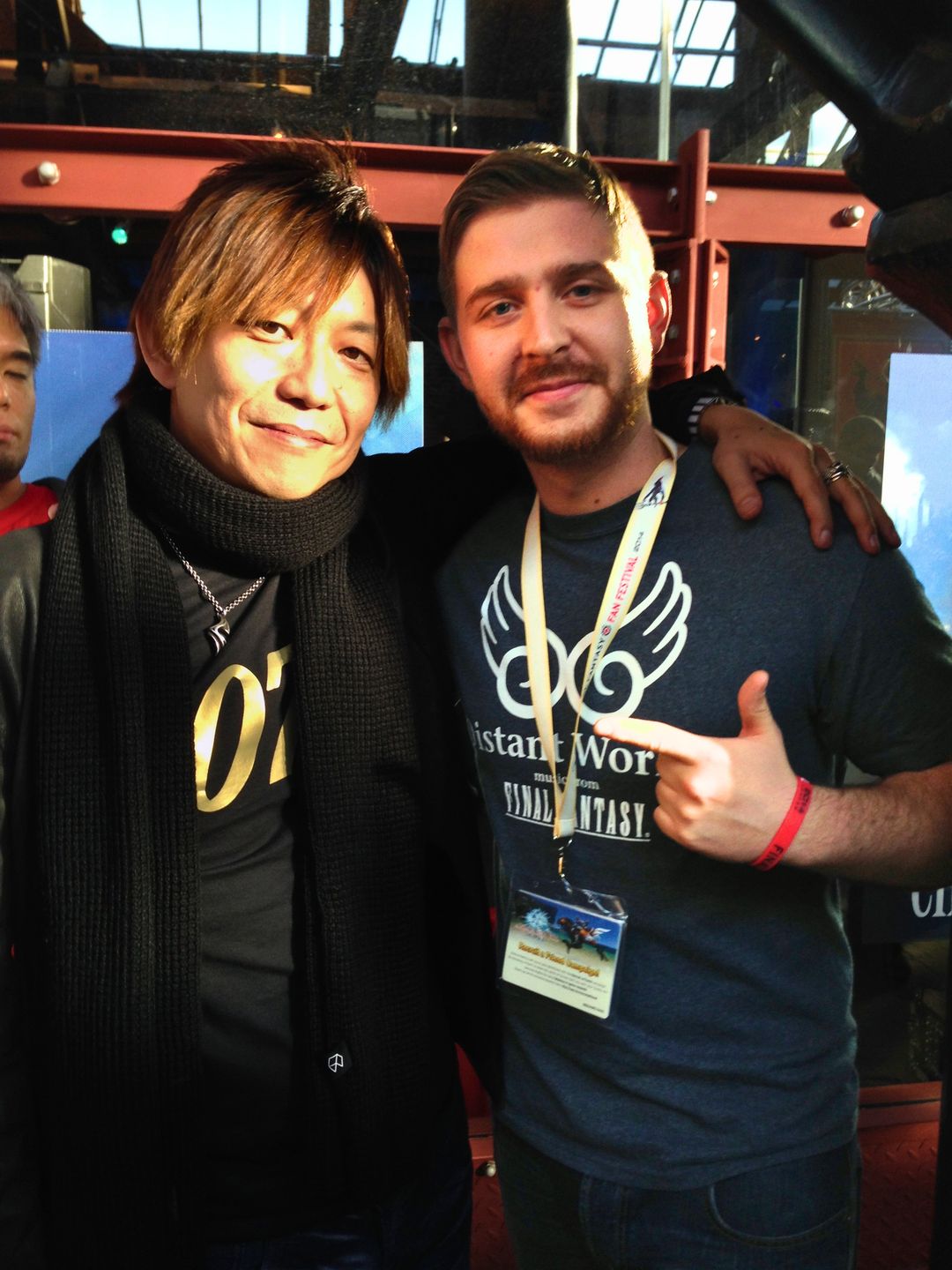


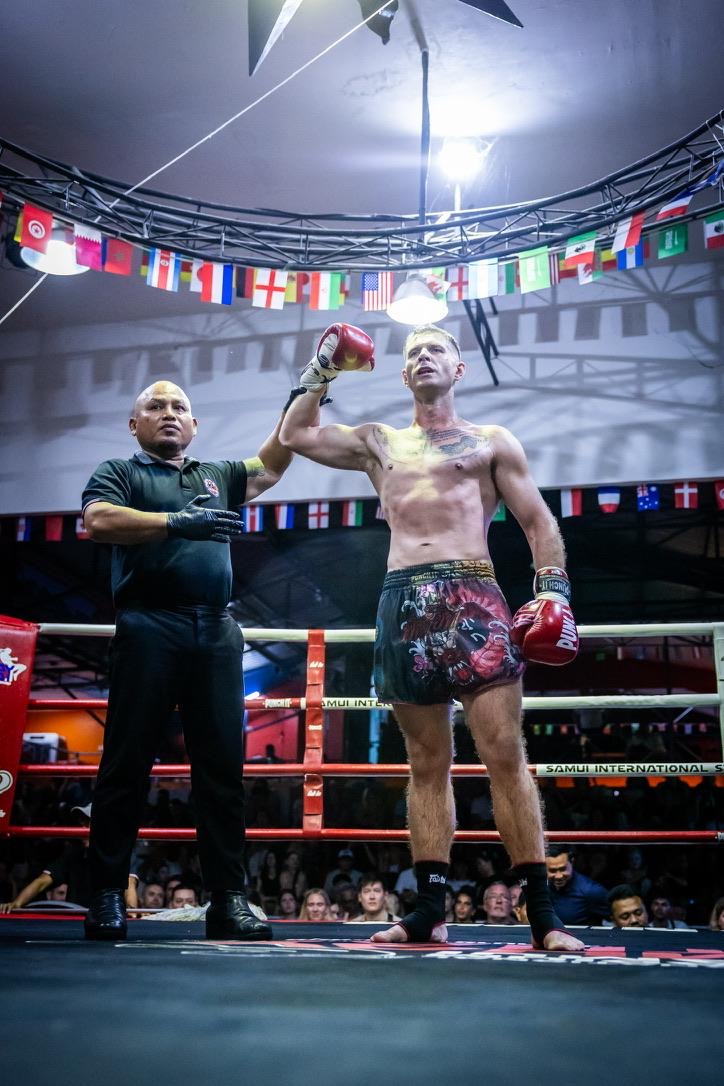
Getting coached properly as a fighter changed how I saw coaching. I'd always thought it was only for beginners, and I had that completely wrong. Pick any sport, whether it's football, tennis, golf or the Olympics, and everyone at the top of it has a coach. A good coach aims your effort at the few things that actually change anything and keeps it off the rest, and that's worth as much on your first day as it is at the top.
Why me, then. That fight record wasn't handed to me, and there's no faking it when the fella in the opposite corner is trying to take your head off. You don't win six of those with bad information.
Then the part that's easy to skip past. I spent 20 years managing, developing and mentoring people for a living, in household name companies where you don't last long if you can't actually do it. Knowing what someone should do has never been the hard part of this. Getting a real person to keep doing it through a bad week, a work crisis and a fortnight away is a completely different skill, and that's the one I got paid for.
I'm also a NASM Certified Nutrition Coach, so the nutrition side isn't guesswork. That's the half of this nobody can see from the outside, and it's the half most people get wrong.
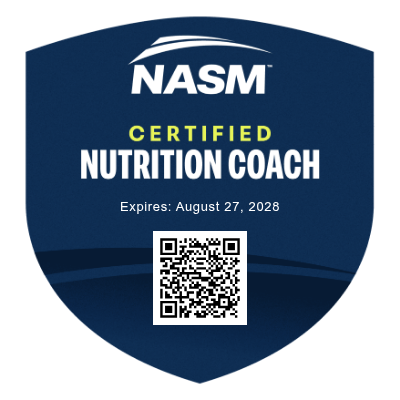 Certified Nutrition Coach
National Academy of Sports Medicine, valid to 2028
Verify this credential →
Certified Nutrition Coach
National Academy of Sports Medicine, valid to 2028
Verify this credential →
How it works
The CORNER Method
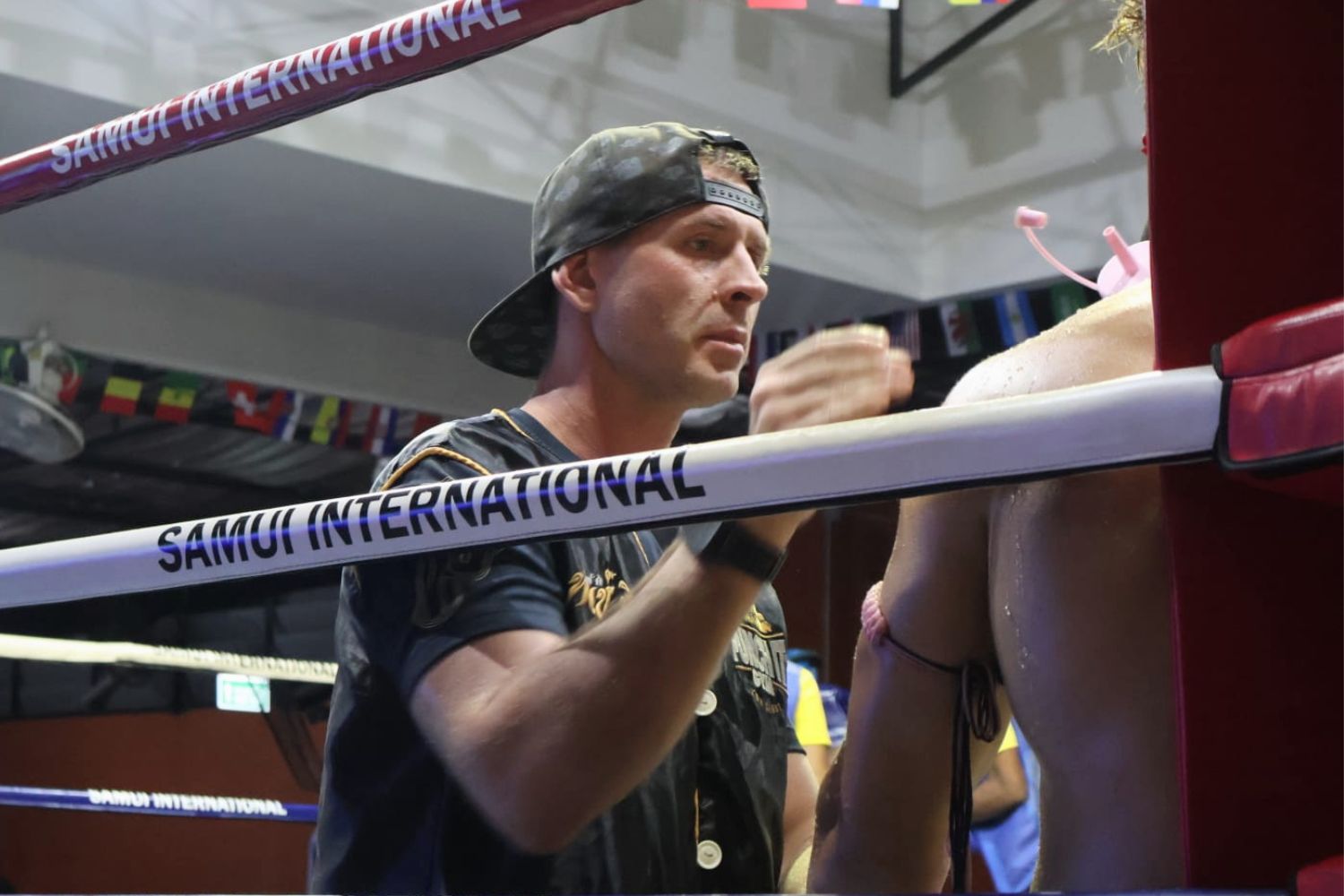
As your coach, I'm in your corner, and I mean that. I'm an active fighter, and I corner other fighters too, so I'm on both sides of the ring. In the gym it's the same. I coach people for a living, and I train just as hard myself, week in week out.
Your corner is the coach who built your training in the first place, so they already know your habits and where you come apart. Then they watch the round from outside the ropes, because nobody can see the fight they're in. Two minutes to reset you, tell you what needs changing, and be straight about whether it's working.
Take the ring out of it and the job is almost identical. That's where the Corner Method came from. Six stages, and everybody gets the same six, because what actually works was settled a long time ago. Fitting it to the life you've got is the hard part, and that's my job.
4 November 2025
Context
Everything starts with how your life actually runs. The hours you've got in a week, what you've tried before and where it came apart, your injuries, the food you like, and how you move. Every decision after this one gets made off what comes out of here.
Objective
What you want out of this, and why it matters to you. We set short, medium and long term goals, so there's something in front of you every few weeks, something to check the whole thing against halfway, and something at the end worth the effort.
Route
Your programme, and which way we go about it. You can't pick a route without knowing where you're setting off from, which is your context, and where you're headed, which is your objective. Then I fit what actually works round your week. Three days a week usually means working your whole body each session, and four usually means upper body one day and lower the next. Where you start depends on what you've done before. Not the best programme on paper, the one you'll actually keep doing. It lands in the Trainerize app on your phone, with a video on every exercise, so you always know what you're doing and why it's in there.
Numbers
Then your dose, which is where most of this is won or lost. Your sessions, your sets and reps, what goes on the bar, and on the nutrition side your calories and your protein. I set all of it to what you can recover from and actually stick to. Most people train more than they need to and progress less than they should.
Execution
Then it's the work, week in week out. That part's yours, and mine is watching it closely enough to catch what you can't. Every week I see your sessions, what you lifted, your sleep and your food, and if something's slipping, it shows up there long before it shows in the mirror. You also get the reasoning behind every change, so by the end you understand your own training rather than just following it.
Review
Every month we go back over the lot, and again halfway through and at the end. The scale tells you plenty early on and not much later, so we go on your photos, what's going on the bar and what your body will do. You won't spot most of what changes, so it gets shown to you, and your plan gets changed off what we find.
Why any of this matters
Your feed's full of shredded abs and Love Island bodies. You scroll straight past, because none of it has anything to do with you and you've seen a thousand of them. What actually gets to you is closer to home. Someone you know, a parent or a mate, heavier and slower than they were, out of breath at the top of a flight of stairs they'd have taken two at a time a few years ago. You've noticed it on them, and they probably haven't. So who's noticed it on you?
Your body is the most important investment you'll ever make, because every other investment depends on it. You only get one, and it has to take you from your first breath to your last.
There's a book that had a huge impact on me, The Top Five Regrets of the Dying by Bronnie Ware. She spent years working in palliative care, with people in the last weeks of their lives, and she wrote about what they told her they regretted. That book is one of the reasons I take more risks now than I used to, and part of why I walked away from a career I no longer cared about to chase something I did. What she wrote about health is the part that matters here:
Health brings a freedom very few realise, until they no longer have it.
Bronnie WarePicture yourself a year from now, having actually done this. Then picture the same year, spent the way this one went. One of those is happening either way. You choose.
Choose your commitment
Same coaching whichever you pick. You get everything I know either way, because I don't have a cheaper version of myself. What changes is how long you've got, and the longer you're coached, the further you get.
Week one
ContextObjectiveRouteNumbers
- An onboarding process that builds a picture of your whole life first, from work and family to whatever fills your weekends
- Goals set for the next few weeks, for halfway and for the end, so there's always one close enough to chase
- Your training programme in the app within 72 hours of onboarding, built round all of it, each exercise demonstrated on video
- Your numbers set, from sets and reps to calories and protein, at a dose your life can actually sustain
- A welcome pack of my own guides and cheat sheets on training, food and sleep, written in plain English and yours to keep
Every week
Execution
- A check-in on whichever day suits you, read and answered by me personally
- Your training and nutrition adjusted round your progress and your life as you go, which is what keeps it bespoke the whole way through
- Film your lifts and I'll check your form and tell you exactly what to fix
- Nutrition coaching built round how you actually eat, taken a round at a time so nothing has to change overnight
- Sleep, recovery and habit coaching, because that's where the training and the food either pay off or don't
Every month
Review
- A full progress review, your photos side by side and your lifts against where you started
- What's working gets kept and what isn't gets tweaked, because a plan needs a few weeks before it shows you either
- The wins you'd never spot yourself pointed out, because seeing them is what keeps you in the game
In between
- Message me however you like, 7 days a week, and I'll answer as soon as I see it
- A call whenever you want to talk something through, booked when it suits you
- When life gets in the way, I'll tell you whether to shuffle, skip or double up, so one bad week never costs you the month
Follow the programme for 30 days and if it isn't working for you, you get your money back in full. The only condition is that you've actually done it. Sessions in, check-ins done, nutrition followed, and you've talked to me. Do all that and if it's still not right, I'll refund you.
Questions?
Then you already know the useful bit, which is that effort wasn't your problem. Most people stop after months of real work that showed them nothing, and packing it in is the sensible response to that. What changes it is programming that's right for you and someone pointing out the progress while it's happening, because a lot of it you can't see yourself. Somewhere around six months it tends to stop being a thing you're attempting and start being part of your week.
Worth splitting that in two, because "I'm not sure it's worth it" and "the money isn't there" are different problems and only one of them is about price. If the money honestly isn't there, say so and I'd rather you did. If it's there but it'd make things tight, tight is sometimes the reason it works. Broken down, 3 months is a bit under £70 a week, which is less than plenty of things people buy without thinking twice. And you've been making this decision for years already, by default. The only thing changing today is which way it goes.
I'd rather ask than argue about it. What does a normal weekday evening look like for you, from getting in to going to bed? Most people answer that and answer their own question halfway through. And if it turns out there really is no room, I'll tell you and we'll leave it.
I can't tell you, and be careful with anyone who does. Your genetics, your training history, your sleep and the food you actually like are all different to the next person's, so the same programme run by two people lands in two different places. What I can tell you is that whatever you've got to work with, the plan gets built to get the most out of it. 2 days a week that you'll actually do beats 4 you won't, and I'd rather build for the week you've really got. Then it comes down to what you put in. Do the sessions, take the nutrition seriously, and you'll get as close to what your body can do as your circumstances allow. I'll give you the best possible plan. The doing is on you.
You'll get more out of this with a gym, and I'll be straight with you about that. Proper resistance training with weights you can keep adding to is what drives most of the results, so a gym or a decent setup at home with dumbbells and a bench is where this works best. If all you've got is bodyweight I can still build you something worthwhile, it just won't take you as far.
Not at all. Muay Thai is what I do, it isn't what I sell. Most of my coaching is general health and fitness for people with regular jobs and regular lives, and you'll never have to throw a punch.
Message me and we adjust it. Half the reason people stop is nobody told them what to do when the week fell apart, so that gets decided in advance rather than in the moment.
There's a review near the end, and it comes down to whether you carry on or not. No auto-renewal and no tie-in, so stopping is entirely up to you. But this isn't something you finish. You reach the first goal and there's another one behind it, and staying in shape is an ongoing job, not a box you tick once. It doesn't work like that for anyone, including me.
No. If you want a bodybuilding or powerlifting prep, I'm not your man, and I don't do anything clinical, so if there's something that needs a doctor or a physio, see one first. I also won't sell you a programme on its own, because the coaching is the product and the plan is the cheap part. And if you're after a 12 week transformation with a number attached to it, you'll find someone who'll promise you that. It won't be me.
Age like an athlete
A free guide, plus a one-page cheat sheet. What actually fades and why, what's worth training for, what to ignore, and a week of training that fits round a real job. I wrote it as a starting point, not a programme, because it can't be built for you if I've never met you.
If this sounds like you
Book a free coaching call and we'll go through where you're at, what you want, and whether I'm the right person to get you there. If it isn't a fit, I'll tell you.
Book a free coaching call Or pick a package